
Direct-Fit Performance Series for the Uzbekistan Fleet
Engineered for high structural resilience under extreme thermal gradients across Central Asian continental climates.
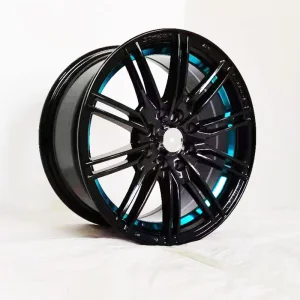
Wholesale KIPARDO 15" Black Color Machine Face Alloy Wheels for Uzbekistan Sedans
Order Wholesale Supply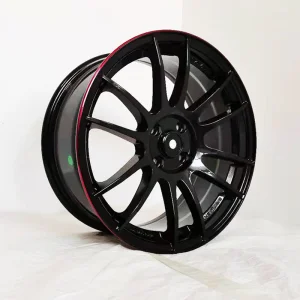
KIPARDO 15" 5x100 Undercut Red Japanese Styling Hub for Uzbekistan Aftermarket
Request FOB / DDP Pricing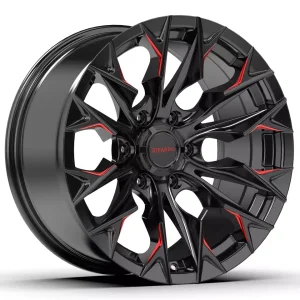
Discount Kipardo RTS 17x9 4x4 Heavy-Duty Alloy Wheels for Navoiy Resource Logistics
View Offroad Specs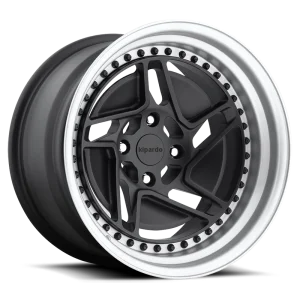
Custom Forged 3-Piece Modular Luxury Rims for Tashkent Automotive Restyling
Bespoke Engineering QuoteUzbekistan Automotive Landscape & Structural Demand Dynamics
Strategic alignment with Central Asia's fastest-growing automotive hub, transitioning from steel standardizations to advanced aluminum alloy architectures.
The Local Industrial Imperative: Assembly Transformation
Uzbekistan has emerged as the definitive industrial powerhouse of Central Asia's mobility sector. With major localization programs led by domestic manufacturing hubs in the Fergana Valley and Samarkand, automotive components are experiencing unprecedented structural transition. Historically dominated by stamped steel wheels for compact passenger units, consumer and commercial demand is rapidly shifting toward high-strength A356.2 aluminum low-pressure cast alloys.
The operational conditions across Uzbekistan demand exceptional wheel integrity: rapid transitions from urban Tashkent freeways to the sub-zero winters of the Kyzylkum desert and high-temperature summer dust corridors. Wheels must combine severe radial impact resistance (13° pendulum test compliance) with microstructural integrity that mitigates fatigue cracking caused by corrugated unpaved road networks.
Global Geopolitics, Supply Chains & Rail Corridors
The global automotive aluminum wheel ecosystem is facing supply reconfiguration. Rising raw ingot volatility and heightened scrutiny over carbon emissions have forced Tier-1 and regional aftermarket distributors to reevaluate their supplier footprints. Chinese casting facilities connected through the China-Kyrgyzstan-Uzbekistan (CKU) multimodal transport corridor and the Yiwu/Xi'an-Tashkent express rail networks provide definitive lead-time and freight cost superiority over sea-land transit routes.
By leveraging standardized 40-foot HQ container rail networks, Rimax delivers predictable 12-to-16 day transit schedules directly to Tashkent dry ports, safeguarding Tier-1 aftermarket retailers from maritime demurrage risks and enabling continuous 'Just-in-Time' (JIT) stock optimization.
Technical Roadmap: Low Pressure Casting (LPDC) vs. Conventional Methods
A rigorous engineering comparison illustrating why Rimax LPDC configurations lead the industry in torsional endurance and grain uniformity.
Bottom-Up Liquid Pressurization
Unlike conventional gravity casting where liquid metal is poured from top hoppers trapping ambient air pockets, our Low Pressure Die Casting forces molten A356.2 through a central stalk from below under 0.6–1.0 bar pressure. This eliminates air entrapment and yields zero internal gas inclusions.
T6 Microstructural Solution & Artificial Aging
Cast wheels are subjected to continuous 535°C solution heat treatment for 5 hours, followed immediately by water quench at 60°C within 15 seconds. Subsequent artificial aging at 155°C precipitate Mg2Si crystallites within the aluminum matrix, raising tensile yield to >220 MPa.
5-Axis High-Precision CNC Turning
Wheel center bores, hub seating surfaces, and PCD bolt patterns are machined on high-speed 5-axis DMG MORI turning centers. Run-out tolerances are strictly maintained below 0.30mm, virtually eliminating high-speed vibration on passenger transport vehicles.
Localized Application Scenarios: Meeting Uzbekistan's Real-World Demands
Specific wheel fitments, alloy adaptations, and finish protections configured for regional duty cycles.
Urban Transit & Intercity Fleet Networks (Tashkent – Samarkand)
Uzbekistan's urban transport ecosystem operates high-mileage sedans and light commercial vehicles. Rimax 15-inch and 16-inch low-pressure cast configurations provide the exact hub-centric offsets (PCD 4x100, 5x10⁵, 5x114.3) necessary to prevent premature suspension wear. Reinforced rim flanges withstand heavy curb impacts, offering regional fleet operators reduced maintenance downtime and lower lifecycle operating costs.
Heavy Natural Resource & Mining Corridors (Navoiy & Zarafshan)
The industrial extraction belts of central Uzbekistan present extreme off-road conditions characterized by sharp rocky terrain, alkaline soils, and high ambient dust loads. Our dedicated 4x4 offroad wheels feature increased backpad thickness, reinforced bead retaining lips, and certified load capacities up to 1,250 kg per corner, meeting the requirements of utility pickups and exploration convoys.
Industrial Master Inventory: Heavy 4x4, Forged & Cast Specifications
Full spectrum certified alloy hubs designed for distribution networks across Uzbekistan and the wider CIS region.
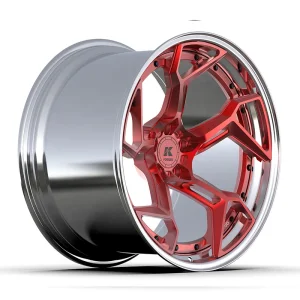
OEM Kipardo Custom 18–22" 6061-T6 Concave Forged Alloys for Uzbekistan Elite Markets
Order Custom Forged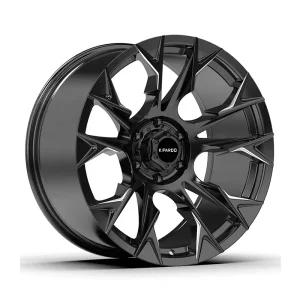
Custom Kipardo 20" 5/6 Hole Aluminum Alloy Rims for 4x4 Desert Overlanding
Wholesale Inventory Quotes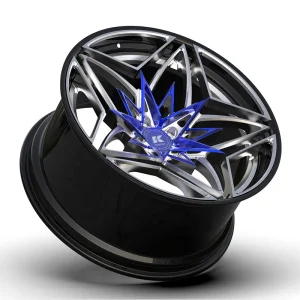
Modular 18–30" 2-Piece & 3-Piece Precision Forged Rims for Custom Build Studios
Download Billet Pricelist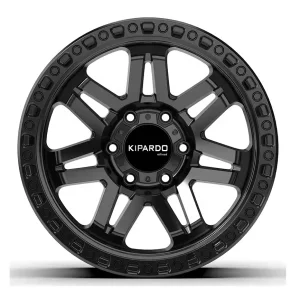
Kipardo 17–18" 6-Hole Rugged Aluminum Alloy Rims for Light Commercial Truck Fleets
Order Commercial Fleet Stock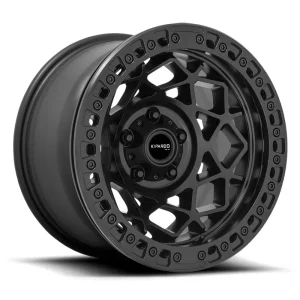
ODM Kipardo 17–20" Matte Black Cast Aluminum Rims for SUV Upgrade Centers
Get Manufacturing Cost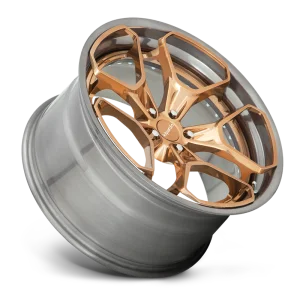
Kipardo Aerospace Billet Monoblock & Modular Alloy Rims for High-End Sedans
Review CAD Data & Pricing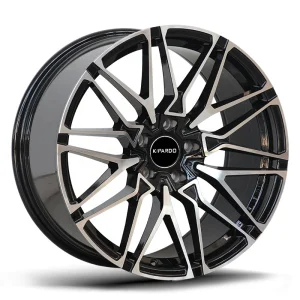
Exclusive 19–22" Multi-Spoke Luxury Diamond-Cut Wheels for Executive Vehicles
Request Exclusive Rights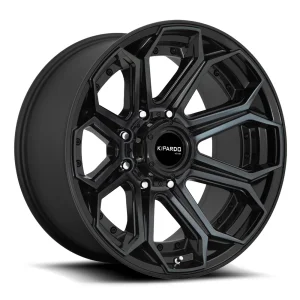
JWL/CE Certified 17–20" 6x139.7 Offroad Wheels Fit for Heavy SUVs & Pickups
Download Test ReportsInternational Compliance Architecture: JWL, VIA, and GOST Verification
Stringent non-destructive testing and mechanical stress procedures ensuring problem-free import clearance and long-term operating safety across the CIS.
Dynamic Radial Fatigue Verification
Wheels are tested on high-speed drum dynamometers loaded to 2.5 times maximum rated capacity for over 500,000 continuous cycles, verifying spoke-to-rim juncture durability well beyond normal road service life.
13-Degree Pendulum Impact Assessment
Simulating severe curb strikes at low angles, a striker wedge impacts the tire/wheel assembly. Zero sudden air deflation, no through-cracks, and no separation of the center member are strictly enforced for batch acceptance.
CASS Corrosion & Salt-Spray Resistance
Engineered for salted roads and arid alkaline soils, our wheels endure a minimum of 240 hours in Copper-Accelerated Acetic Acid Salt Spray (CASS) chambers without paint adhesion loss or subsurface aluminum oxidation.
Technical & Commercial FAQ: Importing Cast Wheels into Uzbekistan
Key information regarding customs documentation, logistics options, load ratings, and private labeling for regional importers.
What are the freight transit times and logistics options from China to Tashkent?
We utilize regular rail routes departing from Xi'an, Zhengzhou, and Yiwu reaching Tashkent (Chukursoy / Sergeli logistics terminals) within 12 to 16 transit days. Direct truck transport via the Khorgos border crossing is also available for rush orders, arriving in 7 to 9 days.
How are import certificates (GOST-U / UzStandard) handled for wheel shipments?
Every shipment is delivered with factory test protocols matching ISO 3006, JWL, and VIA standards. We provide complete chemical assay reports (spectrometer readouts for A356.2 composition) and dimensional charts to help your brokerage clear UzStandard certification promptly.
What minimum order quantities (MOQs) apply for custom wheel manufacturing?
For existing tooling across our cast alloy catalog, standard production MOQs start at 60–80 pieces per size/PCD configuration (suitable for mixed 20ft or 40ft HQ rail containers). For custom forged designs, our CNC tooling lines support production down to 4 pieces per bespoke order.
Can you provide custom private-label branding and localized packaging?
Yes. We support custom-stamped casting backpads, custom engraved center hub caps, and custom-printed high-crush cartons displaying your local brand, Russian/Uzbek trade markings, and SKU barcodes ready for point-of-sale inventory intake.