
Engineered Cast Wheels for United States Automotive Platforms
Explore precision low-pressure cast alloy wheels purpose-engineered for high-torque American passenger sedans, JDM imports, and performance tuning lines requiring rigid SAE J2530 and JWL structural validation.
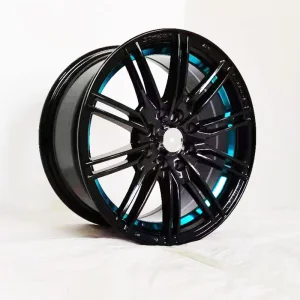
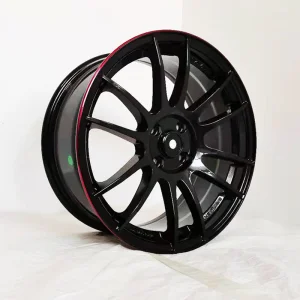
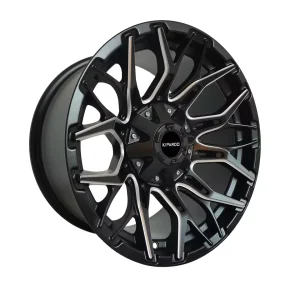
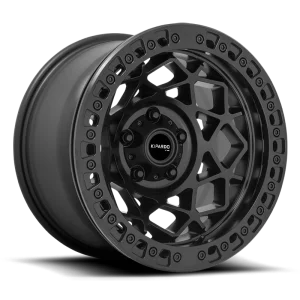
Commercial & Industrial Realities of Cast Wheel Manufacturing in the USA
A strategic overview of domestic foundry capacities across the Rust Belt and Midwest, stringent environmental compliance mandates, escalating overheads, and the shifting dynamics between OEM Tier-1 contracts and aftermarket distribution channels.
The Domestic Foundry Footprint: High Barriers & OEM Prioritization
Within the United States, commercial aluminum wheel casting operations are predominantly concentrated across historical industrial centers in Michigan, Ohio, Indiana, and Kentucky. The vast majority of domestic foundry capacity is permanently allocated to long-term OEM Tier-1 framework agreements servicing Detroit’s Big Three (General Motors, Ford, and Stellantis). As a consequence, independent aftermarket wheel brands, national tire wholesale chains, and private-label automotive brands face severe roadblocks when attempting to procure custom low-pressure or gravity-cast wheels domestically.
Domestic foundries operate under intensive capital overheads, soaring industrial electricity tariffs, and rigorous Environmental Protection Agency (EPA) Title V air quality permits governing aluminum smelting emissions, fluorated dross processing, and volatile organic compound (VOC) releases during powder coating. Incurring custom mold tooling charges ranging from $25,000 to $45,000 per SKU with minimum batch commitments exceeding 5,000 units per fitment makes local low-pressure die-casting economically prohibitive for small-to-midsize North American wheel enterprises.
Surging Demand for Truck & SUV Heavy-Duty Fitments
The contemporary American automotive landscape is overwhelmingly driven by light truck, crossover, and sport utility vehicle (SUV) platforms. Out of the top three bestselling vehicles in the United States—the Ford F-Series, Chevrolet Silverado, and Ram Pickup—all demand heavy load-bearing cast wheels.
With gross axle weight ratings (GAWR) continuously climbing due to payload requirements and trailer towing capacities, cast wheels must maintain certified structural thresholds of at least 2,200 to 3,500 lbs per corner. Wheel distributors require cast designs accommodating oversized 6x135, 6x139.7 (6x5.5"), and 8x180/8x170 bolt patterns with aggressive zero or negative offsets.
Bridging American Brand Ambition with Advanced Chinese Foundry Precision
Global wheel manufacturing has transitioned into a highly synchronized technical ecosystem. While American wheel brands lead the world in styling innovation, brand equity, off-road community building, and retail distribution, Chinese precision foundries provide unmatched industrial scalability, advanced metallurgic degassing, automated low-pressure die casting (LPDC), and rapid tooling turnaround.
At Shanghai Rimax Industry Co., Ltd., our JWL-verified Kipardo manufacturing facilities harmonize primary virgin A356.2 aluminum ingot smelting with German Spectro-metallurgical spectrometry, high-speed multi-axis CNC lathes, and automated robotic powder application cells. We bridge the structural gap by providing US distributors with cost-effective mold engineering, sub-45-day rapid tooling deployment, and rigorous compliance matching or exceeding US Federal Motor Vehicle Safety Standard (FMVSS) requirements.
| Operational Metric | Traditional US Domestic Foundries | Rimax Industrial Advantage (China) |
|---|---|---|
| Mold / Die Lead Time | 14 - 20 Weeks | 3 - 5 Weeks (CAD to Sample) |
| Average Tooling Cost | $25,000 - $45,000 / SKU | $3,500 - $7,000 / SKU |
| Primary Raw Material | Secondary / Recycled A356 Scrap | 100% Primary Virgin A356.2 Ingot |
| Minimum Order Quantity | 1,000 - 5,000 Units / Batch | 60 - 100 Units / SKU (Flexible) |
| Internal Non-Destructive Testing | Sample Spot Checks (Batch Basis) | 100% In-Line Radiographic X-Ray |
| Surface Salt Spray Resistance | Standard 480 Hours ASTM B117 | 1,000+ Hours CASS & Neutral Salt Spray |
Specialized US Fitment Scenarios & Road Environments
From rock-crawling in the Moab desert to enduring corrosive calcium chloride winters in the Northeast Rust Belt, custom cast wheels engineered for the United States must conquer unique environmental and load profiles.
Overland, Rock Crawling & 4x4 Trail Rigidity
American truck owners frequently run sub-15 psi tire pressures across technical terrain in Arizona, Utah, and California. Cast wheels engineered for off-road fitments (e.g. Jeep Wrangler JL, Ford Bronco, Toyota Tacoma, Chevy Colorado) feature reinforced outer lip cross-sections, knurled safety beads to prevent tire bead slippage during heavy acceleration, and specialized clearance for high-capacity brake calipers.
Corrosion Barrier for Northern Winter De-Icing Salts
Municipal highway departments across the Northeast and Upper Midwest heavily treat roads with aggressive calcium chloride and magnesium chloride brine mixtures. Rimax engineers apply a proprietary multi-layer surface protection sequence: electro-deposition zirconium pre-treatment, thermo-curing powder primer, pigmented acrylic color base, and an automotive-grade polyurethane clear coat certified for over 1,000 hours of continuous salt spray exposure.
Next-Gen EV Weight & Instant Torque Demands
The rapid proliferation of electric trucks and SUVs in the US (such as the Tesla Cybertruck, Ford F-150 Lightning, and Rivian R1T) introduces structural stresses unprecedented in traditional internal combustion vehicles. Massive lithium-ion battery packs elevate vehicle curb weights by 25-35%, while instantaneous low-end electric motor torque requires significantly enhanced spoke root thickness and precise bolt-circle friction interfaces.
-
Hub-Centric Precision Boring
Direct bore machining for Ford 87.1mm, GM 78.1mm, and Toyota 106.1mm hubs eliminates steering shimmy and reduces reliance on aftermarket polycarbonate centric rings.
-
T6 Solution & Artificial Aging
Quenching in agitated water baths within 15 seconds of furnace exit followed by 155°C artificial aging delivers optimal tensile strength (>240 MPa) and elongation (>6%).
-
13° & 90° Dynamic Impact Testing
Heavy drop strikers simulate severe curb strikes and off-road rock impacts to confirm structural yield without air pressure loss or critical spoke detachment.
-
Sub-Surface Radiographic X-Ray
Real-time digital fluoroscopy detects micro-porosity, cold shuts, and oxide inclusions at spoke-rim junction zones before any CNC machining occurs.
Global Sourcing Criteria for High-Volume Alloy Wheel Buyers
A technical guide for wheel distributors, private label curators, and procurement directors evaluating supplier capabilities, quality certifications, and next-generation casting technologies.
Flow-Forming Casting Hybridization
The boundary between casting and forging has blurred through the advent of flow-forming (also recognized as rotary forging or rim spinning). By casting a semi-finished preform with LPDC and subsequent hydraulic spinning of the barrel rim under high thermal loads, the molecular grain structure of aluminum is elongated and densified. This yields a 12% to 18% weight reduction over gravity casting while boosting tensile strength to near-forged levels.
Aero-Disc & EV Acoustic Designs
With electric vehicle range sensitivity taking center stage across the US market, cast wheel profiles are transitioning from open skeleton spokes to aerodynamically optimized flush-face designs. Castings now incorporate aerodynamic wind-shearing blades and interior barrel resonance absorption grooves designed to minimize highway drag coefficients (Cd) and reduce cabin road harmonics.
SAE J2530 & JWL Certification Compliance
To successfully import and market cast wheels within North America without legal exposure, full compliance with SAE J2530 (Society of Automotive Engineers) is fundamental. This standard mandates three severe destructive lifecycle tests: Dynamic Cornering Fatigue (minimum 100,000 cycles), Dynamic Radial Fatigue (minimum 500,000 to 1,000,000 cycles), and 13° Lateral Impact Resistance without catastrophic pressure drop.
Frequently Asked Questions by US Importers & Wholesalers
Comprehensive answers regarding foundry tooling, metallurgical integrity, freight tariffs, and structural testing standards.
What is the technical difference between Low-Pressure Die Casting (LPDC) and Gravity Casting?
In Gravity Casting, molten aluminum is poured into an open mold under atmospheric gravity, which can result in trapped gas, turbulence, and minor micro-porosity at critical spoke junctions. In contrast, Low-Pressure Die Casting (LPDC) introduces molten A356.2 alloy from the bottom through a sealed ceramic riser tube under 0.2 to 0.7 bar of pressurized dry gas. This bottom-up laminar filling ensures dense grain packing, minimal oxidation, and superior structural fatigue resistance required by SAE J2530 benchmarks.
Can you manufacture custom private-label cast wheels matching American vehicle bolt patterns?
Yes. Our engineering department develops dedicated tooling molds customized for North American platforms, including 5x114.3 (Ford Mustang, Tesla), 5x120 (Corvette, BMW), 6x139.7 (Silverado, Tacoma), 6x135 (Ford F-150), and 8x170/8x180 (Super Duty trucks). We provide turnkey private labeling: custom debossed brand logos in the mold cavity, tailored center caps with resin domed badges, custom shipping cartons, and laser-etched load data on the rear rim lip.
How do Kipardo alloy wheels compare against US Section 301 tariffs and freight economics?
Even when incorporating US Section 301 tariffs on Chinese automotive components and ocean maritime shipping, the aggregate per-unit landed cost from our Kunshan/Shanghai export center remains between 35% and 50% lower than equivalent production in domestic US foundries. Furthermore, our rapid tooling timeline (30 days vs 16-20 weeks domestically) enables American wholesalers to respond immediately to emerging automotive design trends before competitors.
What quality testing documentation is provided with container shipments to the United States?
Every shipment is accompanied by complete metallurgical and mechanical batch inspection documentation. This includes primary A356.2 chemical spectrum analysis, T6 tensile/elongation hardness reports, radiographic non-destructive X-ray verification records, helium air-leak decay testing logs, and laboratory test certificates for SAE J2530 radial and cornering fatigue validation.
Advanced Cast, Flow-Formed & Forged Engineering Selections
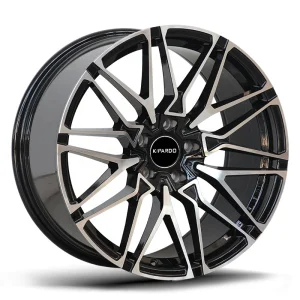
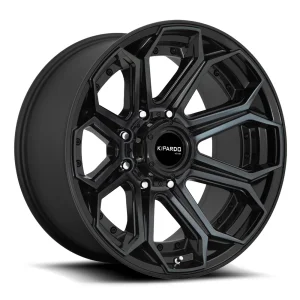
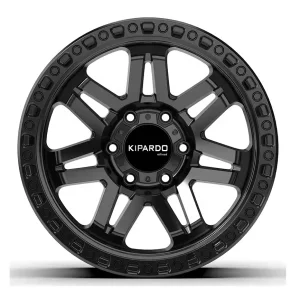
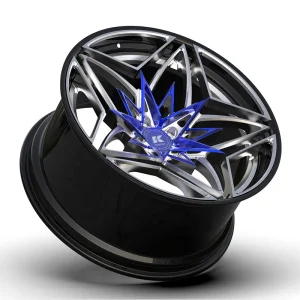
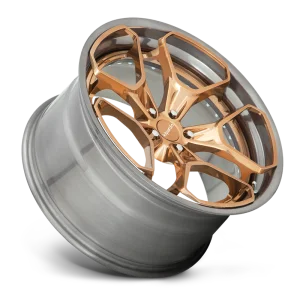
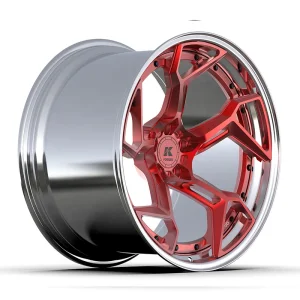
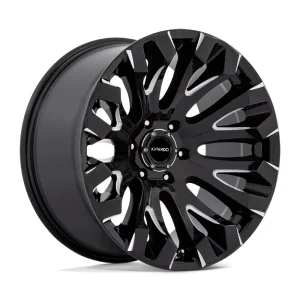
Browse our verified product catalog spanning 17-inch to 30-inch applications, multi-piece modular forged barrels, and extreme load-rated cast wheels for wholesale container supply to the United States.
Partner with Shanghai Rimax Industry Co., Ltd.
Overcome domestic casting constraints and elevate your gross margins with JWL/VIA verified alloy wheels. Deliver technical drawings or target fitments to our engineering desk for immediate mold quotation and production scheduling.