
High-Velocity Aftermarket SKUs for Israel
Direct factory production optimized for SUV overlanding, commercial pickups, and performance passenger vehicle programs across Tel Aviv, Haifa, and Ashdod distribution terminals.
-
4x4 Extreme Desert Fitment
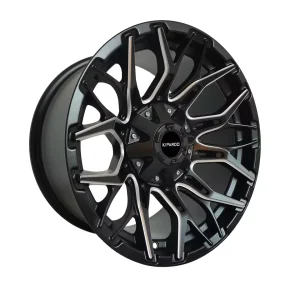
Cheap Kipardo 17-18 Inch 5/6 Hole Custom Casting Car Alloy Rims for Israel 4x4 Off-Road
- Material: A356.2 T6 Cast
- Diameter: 17"-18" Variable PCD
- Max Load: 950 kg / 2,100 lbs
- Compliance: JWL / VIA Verified
-
Luxury Urban Crossover
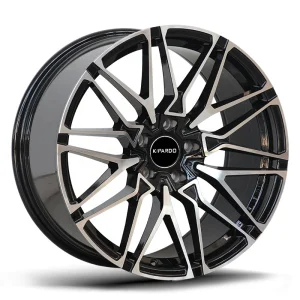
Custom Kipardo 19-22 Inch Wholesale Luxury Alloy Rims Aluminum 4x4 Wheels Israel Exporter
- Finish: Gloss Black / Machined
- Application: Premium SUV / EV
- Standard: SAE J2530 / ISO 3006
- Coating: High Salt-Spray Res
-
Overland Trail Spec
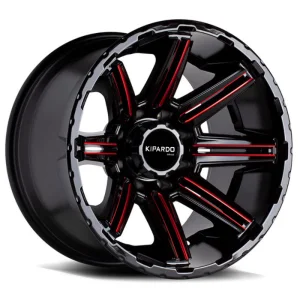
Wholesale Kipardo 17-18 Inch Factory Customized Aluminum Car Rims for Israel Off-Road Importers
- Process: Low Pressure Die-Cast
- Structure: Reinforced Rim Bead
- Certification: JWL-T Impact Tested
- Target Fleet: Toyota Hilux / D-Max
-
6061-T6 Aerospace Forged
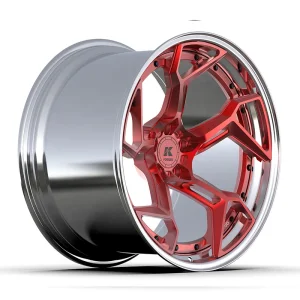
OEM Kipardo Custom 18-22 Inch 6061-T6 Aluminum Concave Forged Wheels for Israeli Performance Distro
- Billet: 10,000-Ton Forged
- Strength: Ultra-Light High-Stiffness
- Customization: Bespoke ET, PCD, CB
- Warranty: 5-Yr Structural Support
The Israeli Automotive Aftermarket & Wheel Import Dynamics
A rigorous examination of homologation criteria, geographic terrain challenges, electric vehicle electrification rates, and commercial supply chain bottlenecks.
The automotive aftermarket in Israel represents one of the most demanding, specialized, and quality-driven sectors in the Middle East and Mediterranean economic basin. With automobile import volumes continually scaling across major urban agglomerations such as the Gush Dan metropolis, Haifa, Jerusalem, and Be'er Sheva, the demand for replacement and custom aluminum alloy wheels has developed beyond basic aesthetics into a strict engineering discipline. Automotive importers and tier-1 distributors operating under the regulatory supervision of the Ministry of Transport and Road Safety (MoT) face stringent import requirements governed by the Standards Institution of Israel (SII - Makhon HaTkanim), alongside global testing benchmarks such as Japanese JWL/VIA criteria, German TÜV standards, and American SAE J2530 protocols.
Regional Terrain & Climatic Stress Factors: Coastal Salt to Negev Deserts
Unlike Western European driving environments characterized by freeze-thaw cycles and chemical de-icing agents, wheel systems deployed in Israel operate across sharp thermal gradients and intense environmental weathering. In coastal corridors spanning Tel Aviv, Ashdod, Herzliya, and Netanya, automotive wheels endure high relative ambient humidity combined with elevated airborne sodium chloride (marine salt aerosol). This environment induces aggressive filiform corrosion, surface pitting, and clear-coat delamination on sub-standard wheel finishes. Consequently, aftermarket wheels supplied to Israeli distributors require multi-stage pre-treatment, electro-deposition priming, and minimum 1,200-hour CASS (Copper-Accelerated Acetic Acid-Salt Spray) laboratory validation.
Conversely, moving southward into the Negev Desert, Arava valley, and the Judean hills, vehicles encounter punishing gravel tracks, dry riverbeds (wadis), and fine silica dust. The local Israeli driving culture features a thriving 4x4 community dominated by vehicles such as the Toyota Land Cruiser (Prado 150/250 series), Toyota Hilux, Isuzu D-Max, Jeep Wrangler JK/JL, and Ford Ranger. Off-road enthusiasts and defense contractors demand exceptionally robust rim flange geometry, high fatigue thresholds, and structural load ratings exceeding 950 kg per corner to prevent rim fracture during low-tire-pressure sand traverses and rocky ascents.
The Rapid Transition to Electric Vehicles (EV) in Israel
Israel has emerged as a frontline global proving ground for electric mobility, exhibiting double-digit annual increases in battery electric vehicle (BEV) market penetration led by brands including BYD, Tesla, Geely, MG, and Hyundai/Kia. This shift fundamentally alters the engineering specifications required from ODM wheel manufacturers:
Gross Axle Weight Ratings
EV battery packs elevate curb weight by 25% to 35%. Wheels must carry higher continuous dynamic cornering fatigue loads without adding excessive unsprung mass.
Aero Drag & Whistle Reduction
Low aerodynamic drag spoke designs with engineered flow surfaces assist Israeli EV fleets in preserving battery range on Highway 6 and intercity highway corridors.
Instantaneous Torque Loads
Electric drivetrains generate peak torque instantly from 0 RPM. Knurled bead seats prevent tire rotational slipping on the rim under aggressive Israeli acceleration.
Chinese Manufacturing Efficiency vs. Global Sourcing Hubs
Why Tier-1 Israeli importers choose our automated casting, flow-forming, and forging ecosystem over competing European, Turkish, and Southeast Asian suppliers.
Procurement managers across Israel's major industrial zones—from the automotive logistics complexes in Emek Hefer and Petah Tikva to the bonded warehouses surrounding Ashdod Port—continually evaluate total landed cost against production lead-times. While European wheel manufacturers (Germany, Italy) offer reputable branding, their astronomical per-unit tooling costs (€25,000–€40,000 per mold) and prolonged 16-to-24-week lead times constrain inventory turnover. Conversely, our modernized foundry infrastructure in Jiangsu and Zhejiang provinces integrates vertical metallurgy, proprietary tooling workshops, and advanced robotized machining centers that deliver superior capital efficiency.
Pure A356.2 Virgin Alloy
Direct liquid metal molten transfer avoids re-melting dross. Controlled degassing down to <0.12ml/100g H₂ ensures zero microscopic blowholes during low-pressure filling.
Rotary Flow-Forming Barrels
Cold-spin hydraulic rollers compress and elongate the barrel wall thickness down to 2.8mm, aligning crystal grain flow for forging-like tensile strength with cast economy.
Agile ODM Tooling Cycles
From CAD fitment modeling and FEA (Finite Element Analysis) stress simulations to physical steel CNC tooling in only 25 days, reducing time-to-market by over 60%.
Strict JWL / VIA Destructive Test Verification
Before any container departs for Ashdod or Haifa, production test batches undergo rigorous destructive physical verification. This includes the 13-Degree Impact Test (simulating severe curb strikes on Tel Aviv streets without rapid tire depressurization), the Dynamic Radial Fatigue Test (cycling up to 1,000,000 revolutions at 2.2x maximum design load), and the Dynamic Cornering Bending Test (validating spoke root resistance under aggressive slalom maneuvers). Importers receive full digital certificate packs for every container dispatch, facilitating seamless clearance through Israeli customs and ministry inspection portals.
ODM Aftermarket Wheel Pricelist & Quotation Matrix
Indicative FOB Ningbo/Shanghai price structure tailored for full-container load (FCL) buyers, brand owners, and fleet distributors supplying the Israeli market.
| Manufacturing Technology | Wheel Diameter | Typical Application / Vehicle Segment | Target Israeli Fitment | Estimated FOB Price (USD) | Standard MOQ |
|---|---|---|---|---|---|
| Low-Pressure Cast | 15" - 16" | Compact Passenger / Commercial Van | PCD 4x100 / 5x114.3 (Toyota, Hyundai, Kia) | $32.50 – $41.00 | 60 Pcs / Spec |
| Low-Pressure Cast | 17" - 18" | 4x4 Trail / SUV / Mid-Sedan | PCD 6x139.7 / 5x127 (Hilux, Prado, Wrangler) | $44.00 – $56.50 | 60 Pcs / Spec |
| Flow-Forming (Hybrid) | 18" - 19" | High-Performance Sedan / Compact EV | PCD 5x112 / 5x120 (Tesla Model 3, VW, BMW) | $58.00 – $72.00 | 80 Pcs / Mold |
| Flow-Forming (Hybrid) | 20" - 21" | Premium Electric Crossover / SUV | PCD 5x114.3 / 5x150 (Tesla Model Y, BYD, Lexus) | $78.00 – $96.50 | 80 Pcs / Mold |
| 6061-T6 Monoblock | 19" - 20" | Exotic Sports / Track / Armored SUV | Custom PCD / Centerlock (Porsche, AMG, BMW M) | $175.00 – $240.00 | 4 Pcs (Custom Order) |
| 6061-T6 Monoblock | 21" - 24" | Ultra-Luxury Flagship / Desert Off-Road | Custom PCD 5/6/8-Lug (Range Rover, G-Wagon) | $245.00 – $360.00 | 4 Pcs (Custom Order) |
| 2-Piece Modular Forged | 19" - 22" | High-End Stance / Custom Tuning Atelier | Bespoke Lip/Barrel, Hidden Hardware | $320.00 – $480.00 | 4 Pcs (Bespoke) |
*Note on Israeli Landed Costing: Prices quoted above represent Free-On-Board (FOB) at Ningbo or Shanghai sea terminals. Sea freight transit from China to Ashdod or Haifa typically ranges from 18 to 26 days. CIF quotations, container consolidation, specialized dual-stage pallet packaging, custom wheel cap emblem engraving, and private label carton barcoding are calculated upon request.
Engineering Specifications for Israeli Fleet Homologation
Addressing the technical parameters necessary to clear vehicular periodic safety inspections (Test Rikhui) and comply with local road safety laws.
PCD & Hub-Centric Machining
Every wheel is bored to exact OE hub diameters (e.g., 67.1mm, 66.5mm, 106.1mm) avoiding plastic hub rings that melt or degrade during high-temperature braking in mountainous terrain.
Brake Caliper Clearance (X-Factor)
Carefully engineered convex spoke architecture guarantees clearance for performance multi-piston calipers without widening track width beyond Israeli vehicular fenders.
Multi-Stage Powder Coating
3-coat liquid and thermoset acrylic electrostatic powder applications pass 480 hours of UV aging and 1,200 hours salt-spray testing, eliminating coastal blistering.
Expanded Aftermarket & Forged Inventory for Israel
Complete product lineups matching Tier-1 brand programs, specialty 4x4 tuning houses, and commercial alloy replenishment orders.
-
Satin Black Trail
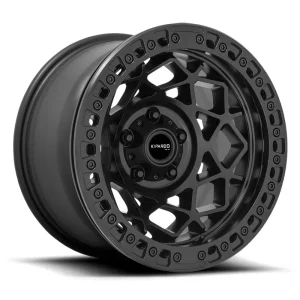
ODM Kipardo 17-20 Inch Wholesale Black Custom Cast Aluminum Alloy Rims 4x4 Wheels Israel
- Structure: Reinforced A356.2
- Fitment: 17x9.0 / 20x9.0
- Coating: Matte Black Powder
- Hub: Multi-PCD Compatible
-
Heavy Duty 6-Lug
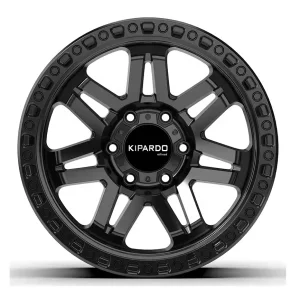
China Kipardo 17-18 Inch 6 Hole Custom Car Aluminum Alloy Rims 4x4 Wheels Israel Supplier
- Bolt Pattern: 6x139.7 / 6x114.3
- Rating: 1,050 kg Commercial
- Target: Hilux / Triton / Navara
- Finish: Anthracite Diamond Cut
-
Modular Multipiece
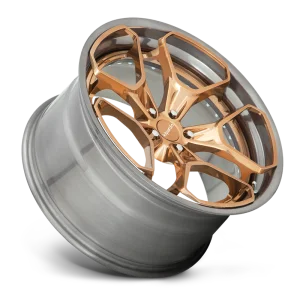
OEM Kipardo Alloy Wheels Forged Car 3-Piece & 2-Piece Monoblock Israel Manufacturer
- Construction: Modular 6061 Forged
- Assembly: Titanium Hardware
- Width: 8.5J to 12.5J
- Style: Concave Step-Lip
-
Urban Tough 20"
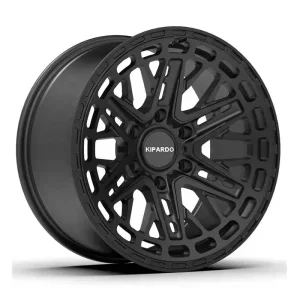
Wholesale Kipardo 20 Inch 5/6 Hole Alloy Rims Aluminum 4x4 Off-Road Wheels Israel Factory
- Application: Full-Size SUV
- Diameter: 20x9.0J / 20x10J
- ET Offset: 0 to +35 mm
- Standards: VIA & SAE J2530
-
Desert Endurance
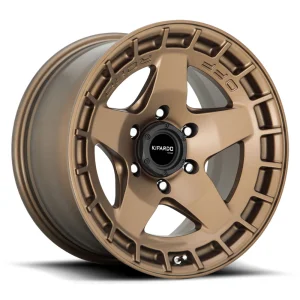
China Kipardo 17-18 Inch High Quality Wholesale Aluminum Alloy Rims 4x4 Wheels Israel
- Alloy: A356.2 T6 Heat Treat
- Bead Seat: Anti-De-beading Profile
- Testing: Radial Fatigue Pass
- PCD: 5x127 / 5x150 / 6x139.7
-
Cross-Country Styling
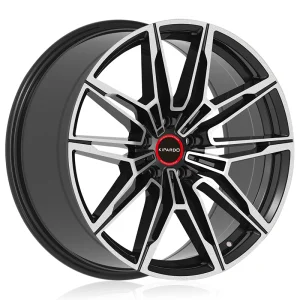
China Kipardo 18-20 Inch Wholesale Cast Alloy Rims Aluminum 4x4 Offroad Wheels Israel Importer
- Design: Aggressive Mesh Spoke
- Finish: Satin Bronze / Black Tint
- Clearance: High Pad for Big Brake
- Load Capacity: 900 kg
-
Prado & Hilux Spec
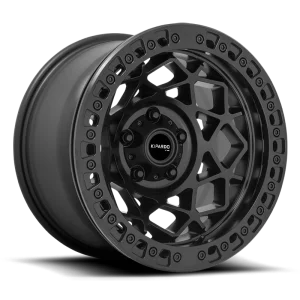
Buy KIPARDO Manufacturer 6 Holes 17 Inch 4x4 Wholesale Aluminum Alloy Wheels Rims Israel Quotes
- PCD: 6x139.7 CB 106.1
- Offset: ET 0 / -10 / +25
- Rim Width: 17x8.5 / 17x9.0
- Price Tier: High Volume Competitive
-
Ultra-Exotic Forged
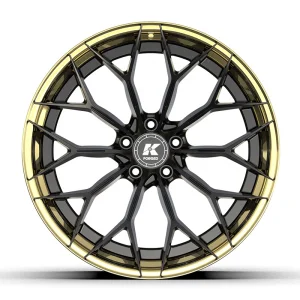
OEM Kipardo Luxury Forged Wheels 3 Pieces Forged Rims Manufacturers for Israel Custom Tuners
- Bespoke: Full Custom Engineering
- Tonnage: 10,000-Ton Forged Core
- Finish: Hand-Brushed / Polished
- Warranty: 5-Yr Structural Support
Frequently Asked Questions for Israeli Wheel Importers
Essential guidance covering regulations, homologation certificates, shipping logistics to Ashdod and Haifa, and custom manufacturing terms.